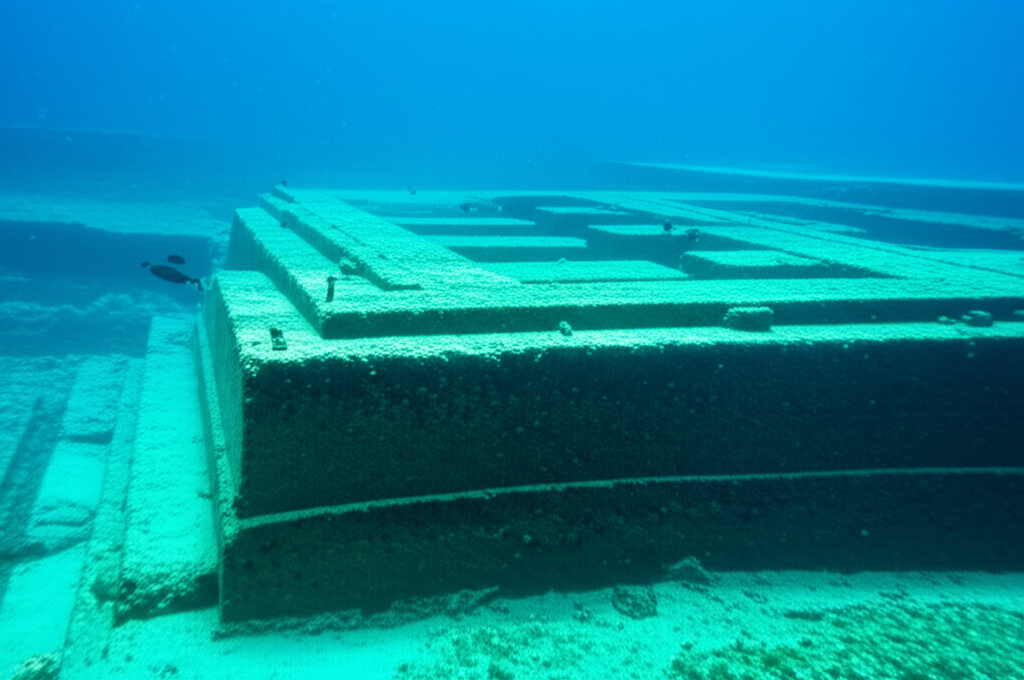
The discovery of the Yonaguni Monument in 1986 off the coast of Japan ignited a persistent academic debate concerning its origins. The submerged rock formation, characterized by immense, terraced platforms and seemingly deliberate rectilinear angles, presented a compelling, if controversial, case for artificial construction. Proponents of this interpretation, most notably marine geologist Masaaki Kimura, postulated that the structure was a remnant of a sophisticated civilization, inundated by seismic events at the end of the last ice age. Evidence cited includes features interpreted as carved steps, triangular depressions, and defined pathways, suggesting human modification beyond natural possibility.
Conversely, a significant portion of the scientific community has advanced a counter-narrative grounded in natural geological processes. This perspective holds that the monument’s striking appearance is the result of its sandstone composition, which is known to fracture along straight, predictable planes. Geologists argue that the region’s intense tectonic activity, combined with millennia of erosion from strong ocean currents, is sufficient to explain the formation’s sharp angles and stepped appearance. From this viewpoint, the perceived design is a classic example of pareidolia, where observers impose familiar patterns onto natural phenomena. The monument thus remains an unresolved enigma, caught between the possibility of a lost history and the demonstrable forces of nature.