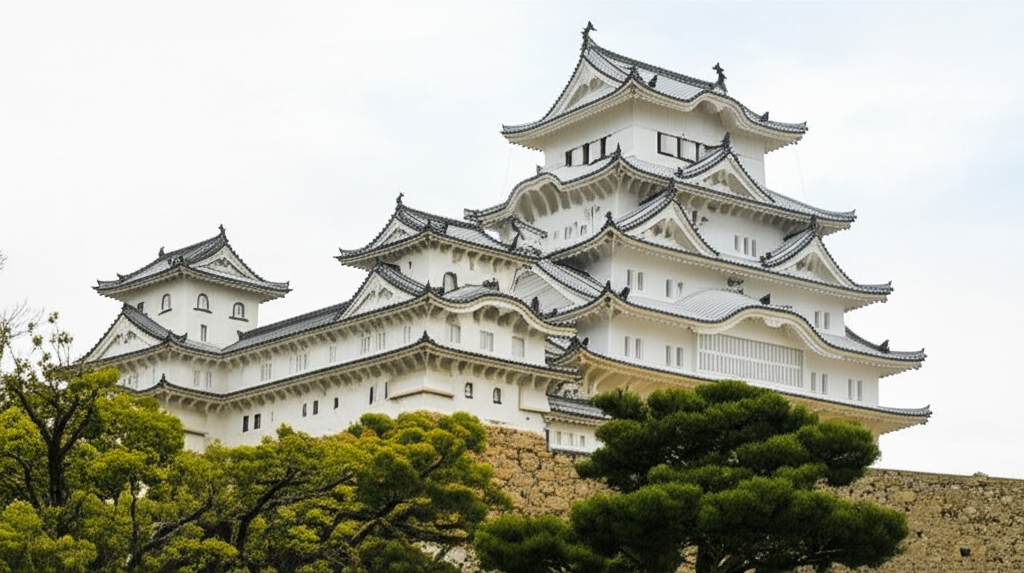
The architectural design of Himeji Castle represents a masterful synthesis of aesthetic grace and formidable military engineering. Constructed during a period of significant conflict, its primary function was defensive, a purpose reflected in every aspect of its complex layout. The fortress was not merely a structure but a sophisticated weapon system designed to repel any invading force.
The approach to the main keep was a deliberately confusing journey. Attackers were funneled through a labyrinthine network of winding paths, narrow gateways, and enclosed courtyards. This design was a core defensive strategy intended to disorient invading armies, break their formations, and expose them to relentless fire from the castle’s defenders. The spiraling route forced a slow, arduous ascent, allowing ample time for defenders stationed in towers and along walls to engage the enemy from superior positions.
The castle’s structures were fortified with numerous defensive innovations. The central tenshu, or main keep, was connected to smaller towers by fortified corridors, creating an integrated stronghold. Walls were punctuated with triangular and rectangular loopholes, providing protected firing positions for archers and arquebusiers. Furthermore, features like ishi-otoshi, openings designed for dropping stones or boiling liquids onto assailants below, were strategically placed above choke points, rendering direct assault a perilous undertaking. This intricate combination of psychological warfare and robust fortifications made Himeji Castle a nearly impregnable fortress.