
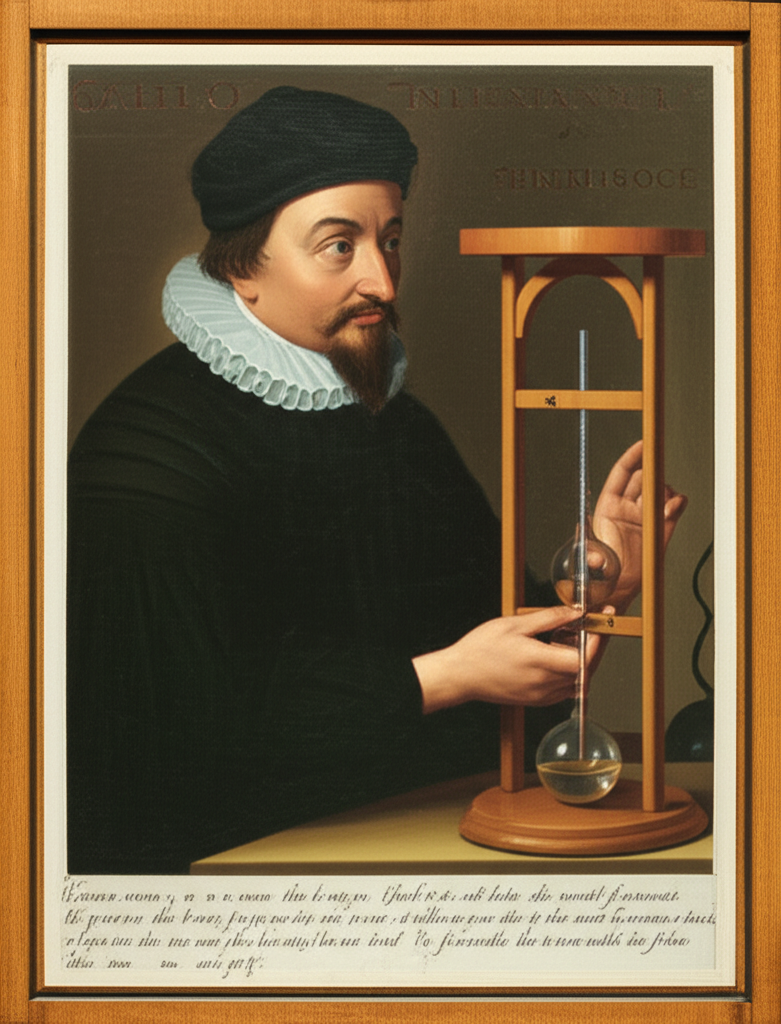
In the final years of the sixteenth century, Galileo Galilei conceived of an instrument designed to provide a relative indication of temperature. This represented a profound departure from the purely sensory assessments of hot and cold that had prevailed since antiquity. His work signaled a critical shift toward the objective quantification of natural phenomena, a cornerstone of the burgeoning scientific revolution.
The device, which came to be known as the thermoscope, was rudimentary yet elegant in its design. It typically consisted of a narrow glass tube with a bulb at its upper end, which was inverted and placed into a container of water or wine. As the air within the bulb expanded or contracted in response to ambient temperature changes, the column of liquid in the tube would fall or rise accordingly, providing a visible gauge of the thermal state.
While a pivotal conceptual achievement, the thermoscope was not a thermometer in the modern sense. It lacked a standardized scale, rendering its measurements comparative rather than absolute. Furthermore, its open design made it susceptible to fluctuations in atmospheric pressure, which could alter the liquid level independently of temperature. Despite these limitations, Galileo’s invention was strategically significant. It established the foundational principle of using the predictable thermal expansion of a substance for measurement, paving the way for the sealed, calibrated instruments that would follow in the next century.

