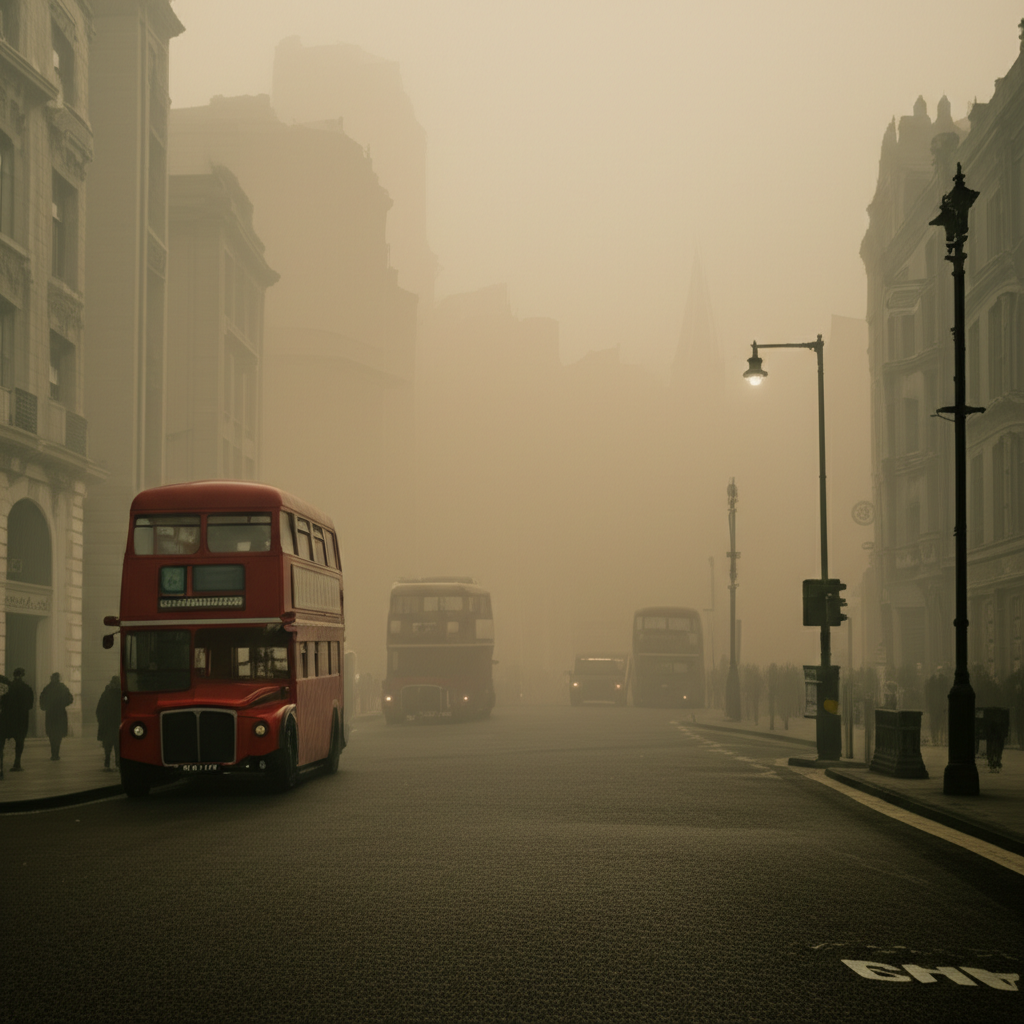
In early December 1952, a period of cold, windless weather precipitated a catastrophic environmental event in London. An anticyclone settled over the city, trapping pollutants from the widespread burning of low-grade, sulfurous coal. The resulting dense, acrid fog, which became known as the Great Smog of 1952, enveloped the capital for five days, paralyzing the metropolis and creating near-zero visibility. While Londoners were accustomed to fog, the unprecedented density and toxicity of this particular event had dire consequences.
Initial government reports significantly underestimated the human cost. Subsequent analysis revealed a staggering mortality rate, with estimates of excess deaths ranging from 4,000 to as high as 12,000 in the weeks and months that followed. The primary causes were respiratory and cardiovascular distress, aggravated by the sulfur dioxide and particulate matter suspended in the air. The sheer scale of the disaster exposed the fatal flaws in post-war Britain’s reliance on cheap, dirty fuel for domestic and industrial power.
The event served as a powerful catalyst for change, galvanizing public opinion and forcing a reluctant government to act. The disaster’s enduring environmental legacy was cemented by the landmark Clean Air Act of 1956. This legislation was a strategic departure from previous measures, introducing “smoke control areas” where only smokeless fuels could be burned. It represented a fundamental shift in public policy, establishing a national framework for air pollution control and setting a precedent for environmental legislation worldwide.