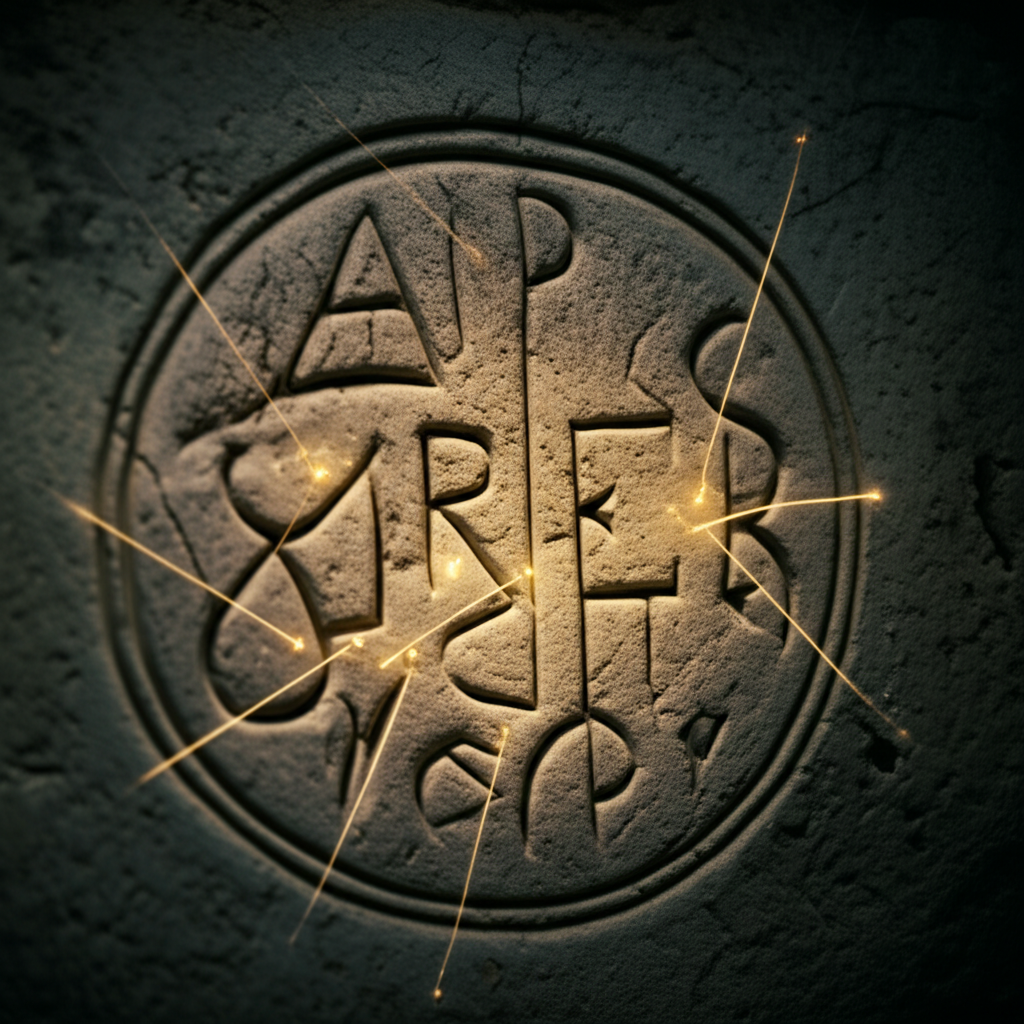
The Shugborough Inscription, a sequence of eight letters carved upon the 18th-century Shepherd’s Monument in Staffordshire, England, remains one of history’s most compelling unsolved ciphers. Set beneath a marble relief mirroring Nicolas Poussin’s painting Et in Arcadia ego, the letters D O U O S V A V V M have resisted definitive interpretation for over two and a half centuries. The strategic placement of this code, nestled between the letters D and M, has fueled centuries of speculation among historians, linguists, and cryptographers.
Early attempts at decipherment often sought a Latin phrase, viewing the letters as an initialism. One prominent theory, Optimae Uxoris Optimae Sororis Viduus Amantissimus Vovit Virtutibus, suggests a personal memorial from George Anson to his late wife. However, this interpretation has been challenged for its grammatical inconsistencies and failure to account for the D and M framing.
More elaborate investigations have connected the inscription to clandestine societies, most notably the Priory of Sion and the Knights Templar. Proponents of this view argue the code is a pointer, a sophisticated key intended to conceal directions to a significant treasure, perhaps even the Holy Grail. Despite the romantic appeal of such theories, they lack direct historical evidence linking the Anson family, who commissioned the monument, to these organizations.
Ultimately, the true meaning of the Shugborough Inscription has been lost to time. Whether it is a private message of grief, a complex philosophical puzzle, or a clue in a grander conspiracy, the code endures as a masterful piece of historical obfuscation, its purpose as mysterious today as it was upon its creation.