In the latter half of the 17th century, astronomical observation was constrained by the inherent flaws of the refracting telescope. The principal limitation was chromatic aberration, an optical distortion that produced a frustrating fringe of false color around celestial objects, severely limiting the clarity and effective magnification of lens-based instruments. It was in addressing this fundamental challenge that Isaac Newton devised a revolutionary solution.
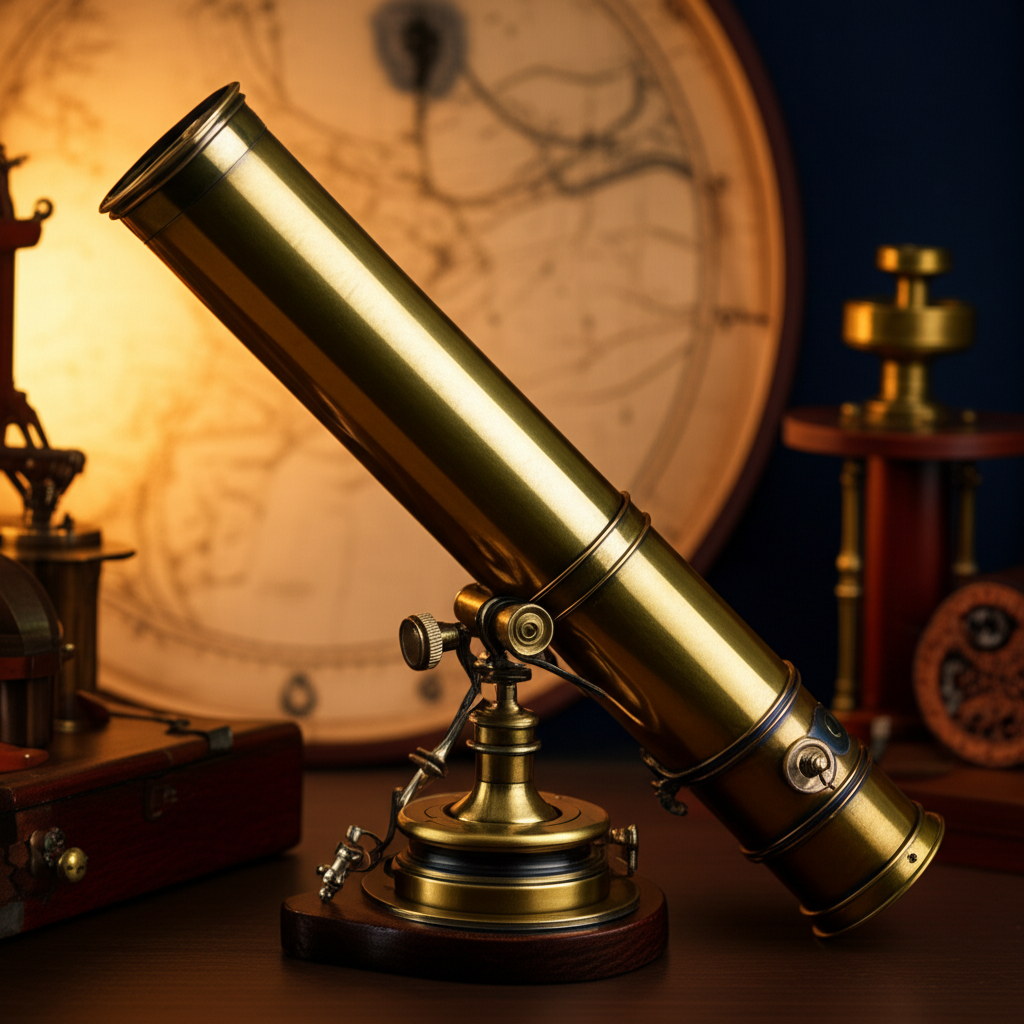
Newton’s strategic departure was to abandon the objective lens altogether. He theorized that if light were reflected from a curved surface rather than refracted through a lens, the problem of color separation would be eliminated. His design, first constructed in 1668, utilized a primary concave mirror cast from speculum metal, a highly polished alloy of copper and tin. This mirror gathered and focused incoming light onto a smaller, flat secondary mirror, which was positioned at a 45-degree angle. This secondary element then directed the focused image to an eyepiece mounted on the side of the telescope tube.
The success of this new instrument, known as the Newtonian reflecting telescope, was immediate and profound. Though his initial prototype was remarkably compact—scarcely six inches in length—it offered magnification and image clarity superior to much larger refracting telescopes of the period. By circumventing the physics of refraction, Newton not only solved the vexing issue of chromatic aberration but also established a new and enduring paradigm for telescope construction, paving the way for the larger, more powerful astronomical instruments of subsequent centuries.