
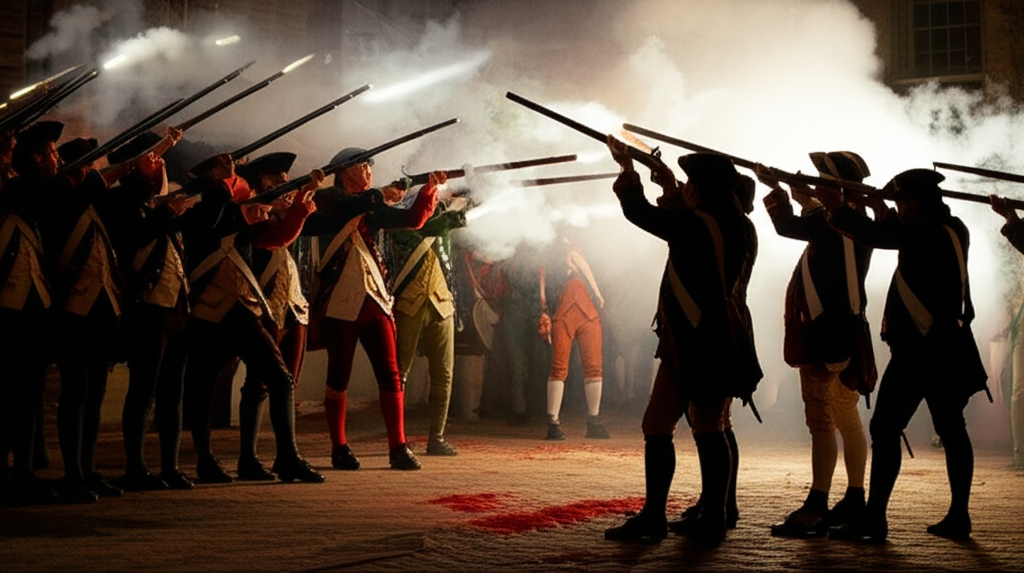
The event of March 5, 1770, quickly transcended its chaotic origins to become a masterfully wielded instrument of political propaganda. In the immediate aftermath, colonial leaders recognized the strategic value of the skirmish. They framed the narrative not as a confused street brawl, but as the Boston Massacre, a deliberate and unprovoked slaughter of innocent citizens by a tyrannical occupying force. This interpretation was crucial for galvanizing colonial sentiment against British rule, which had been simmering but lacked a unifying catalyst.
The most effective tool in this campaign was Paul Revere’s engraving, “The Bloody Massacre perpetrated in King-Street.” This widely distributed image presented a highly sensationalized version of events. British soldiers are depicted in a neat, organized line, firing a decisive volley on a helpless, unarmed crowd at the direct command of their officer. This visual argument intentionally omitted the preceding provocations by the colonists, thereby cementing the image of British brutality and colonial victimhood in the public consciousness.
This carefully constructed narrative was disseminated rapidly through newspapers, pamphlets, and broadsides across the thirteen colonies. By controlling the story, Patriot leaders transformed a complex and violent incident into a clear symbol of British oppression. The strategic manipulation of the Boston Massacre proved immensely successful, hardening anti-British opinion and moving the colonies significantly closer to the path of open rebellion. It served as a stark lesson in the power of information to shape public perception and direct the course of history.

