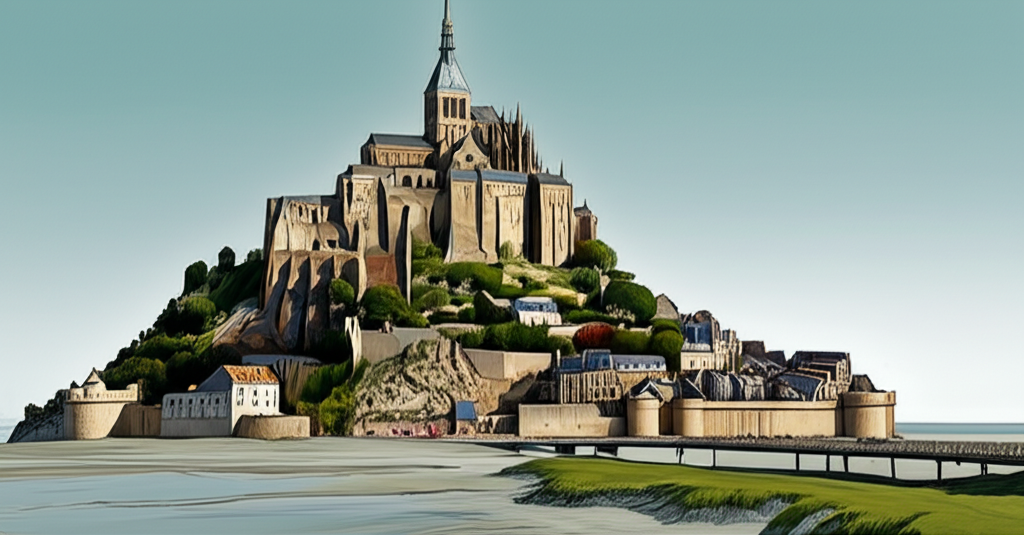
The construction of the Mont-Saint-Michel Abbey stands as a testament to medieval logistical and engineering prowess. The decision to erect a major Benedictine monastery on a tidal island presented formidable challenges that required centuries of sustained effort and strategic planning. The project was fundamentally constrained by the island’s geography and the dramatic rhythm of the surrounding tides.
The initial and most critical obstacle was the procurement and transport of materials. Heavy granite blocks were quarried on the mainland and from the nearby Chausey Islands, then ferried by barge across the bay. These operations were meticulously timed to coincide with high tide, allowing vessels to approach the base of the rock. Once delivered, the stones were hauled up the steep inclines using rudimentary cranes and sheer manpower, a slow and perilous process that dictated the pace of construction.
Architecturally, the builders employed a brilliant strategy of vertical layering. Rather than attempting to level the conical granite peak, they adapted the structure to its natural form. A series of foundational crypts and lower chapels were built directly into the rock, serving not only as sacred spaces but as massive sub-structures. These load-bearing levels provided the stable platform necessary to support the immense weight of the abbey church and the magnificent cloister, known as La Merveille (“The Marvel”), above. This phased, upward construction allowed each generation of builders to contribute to a coherent, ascendant design that respected both spiritual ambition and geological reality.