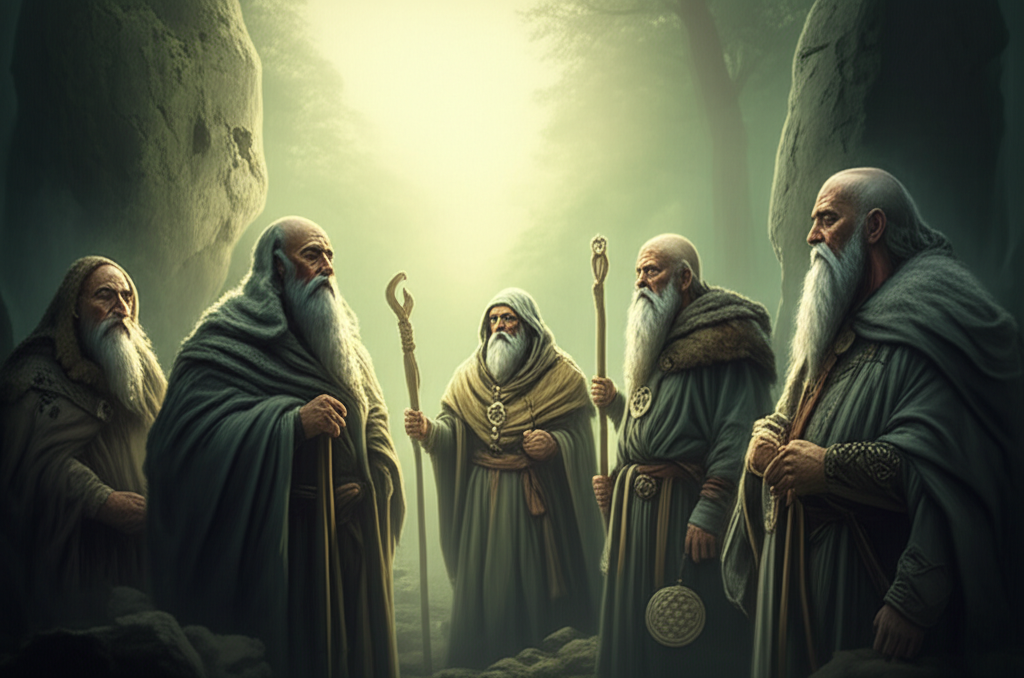
The Druids occupied a central and powerful position within Iron Age Celtic society, one that extended well beyond purely religious functions. These individuals constituted an intellectual and judicial class whose influence permeated nearly every aspect of public and private life. Their authority was not derived from noble birth but from mastery over a vast body of traditional knowledge, encompassing law, philosophy, astronomy, and religious doctrine, which was preserved and transmitted through a rigorous oral tradition that could take decades to complete.
A primary source of Druidic power was their role as judges. They arbitrated all manner of disputes, from land boundaries to capital crimes, and their verdicts were considered final. The most severe punishment they could administer was a form of excommunication, which barred an individual from religious ceremonies and effectively made them an outcast. This judicial authority gave them significant leverage over both chieftains and commoners, allowing them to enforce social cohesion and maintain legal order across tribal territories.
As the custodians of history and lore, the Druids also functioned as the intellectual backbone of their communities. They educated the children of the nobility, advised rulers on matters of policy and war, and presided over the rituals that defined cultural identity. In this capacity, they were not merely priests but the guardians of the very framework that unified the otherwise disparate Celtic tribes, ensuring the continuity of their shared worldview and legal systems through the ages.