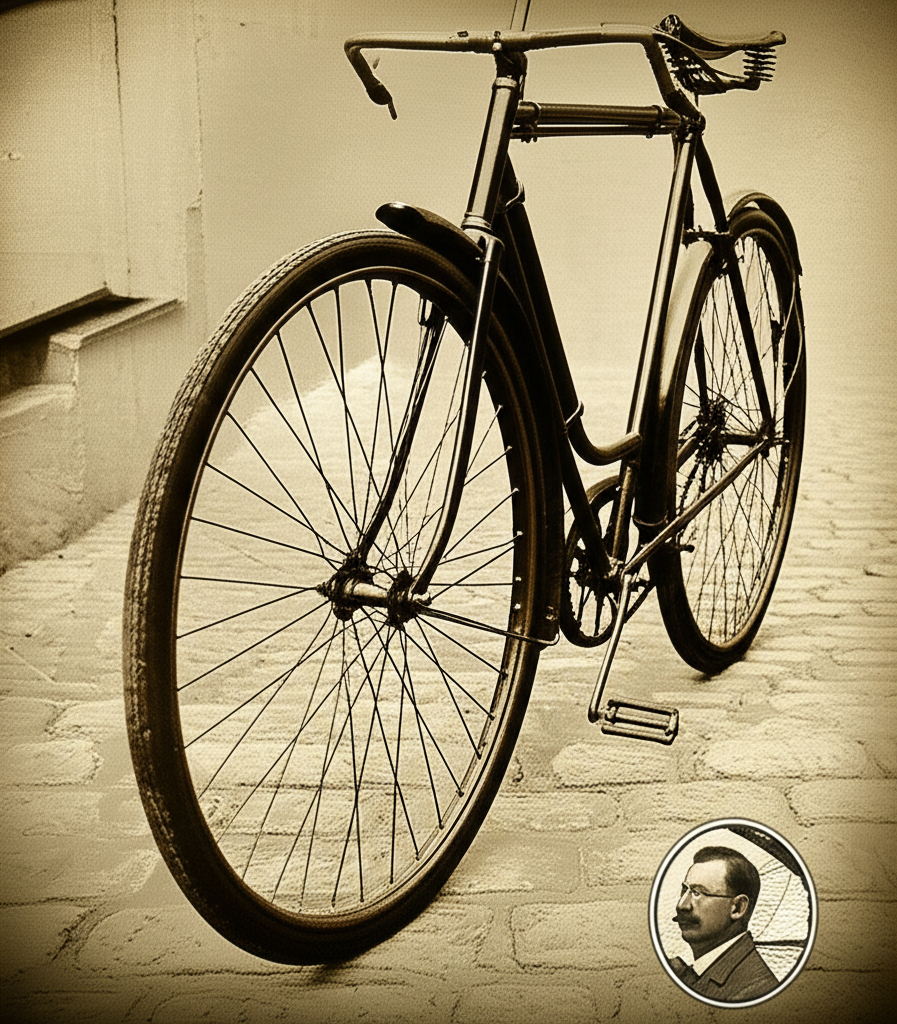
The late 19th century presented a significant challenge to wheeled transport: the jarring ride produced by solid rubber tires on uneven road surfaces. It was within this context that John Boyd Dunlop, a veterinary surgeon in Belfast, devised a revolutionary solution. Motivated by the discomfort his young son experienced while riding a tricycle over cobblestones, Dunlop sought a method to mitigate the harsh vibrations that plagued early cycling.
His initial prototype, constructed in 1887, was a rudimentary yet ingenious device. Dunlop fashioned an inflatable tube from sheet rubber, encased it in canvas for structural integrity, and affixed this assembly to the tricycle’s wooden wheels. The core strategic insight behind the pneumatic tire was not merely to provide a rolling surface but to introduce a cushion of compressed air between the vehicle and the ground. This innovation fundamentally shifted the engineering focus from simple durability to active vibration dampening.
Upon securing a patent in 1888, the superiority of the concept was swiftly demonstrated in the competitive arena of cycle racing. Riders equipped with pneumatic tires gained a decisive advantage in both speed and endurance, proving that air suspension offered unparalleled performance benefits. This pivotal development established a new standard for wheeled vehicles and laid the essential groundwork for the subsequent rise of the automobile.