The inability to accurately determine position at sea plagued maritime endeavors for centuries, making navigation a perilous exercise in estimation. While latitude could be readily calculated, the longitude problem remained a formidable barrier to safe and efficient ocean travel. Astronomical methods, though sound in theory, were often rendered impractical by weather or the unstable deck of a vessel. The solution, therefore, required a different strategic approach—one grounded in the precise measurement of time.
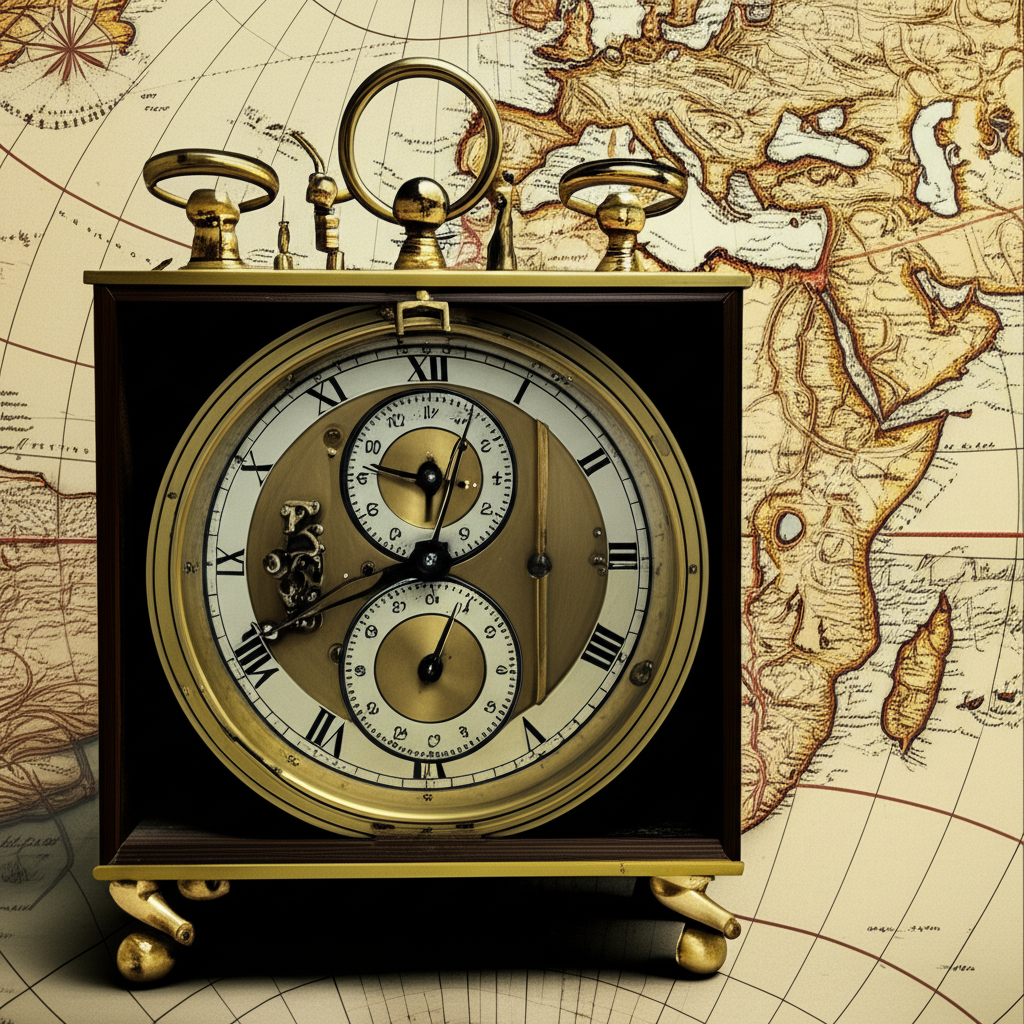
The development of the marine chronometer represented the pivotal technological breakthrough. Its operational principle was direct: by carrying a timepiece set to the exact time of a known location, such as the Greenwich meridian, a ship’s crew could determine its longitude. The navigator would observe the local time, typically when the sun reached its zenith at noon, and compare it to the time displayed on the chronometer. The difference between these two times provided a direct calculation of their longitudinal distance from the home port.
This method’s success hinged entirely on the reliability of the timekeeper. The English clockmaker John Harrison dedicated his life to this challenge, producing a series of ever-more-accurate and resilient instruments. His work culminated in a sea clock that could withstand the severe motion, temperature shifts, and humidity of a long voyage. The widespread adoption of the chronometer transformed maritime navigation from a high-stakes gamble into a predictable science, securing global trade routes and enabling an era of unprecedented exploration.