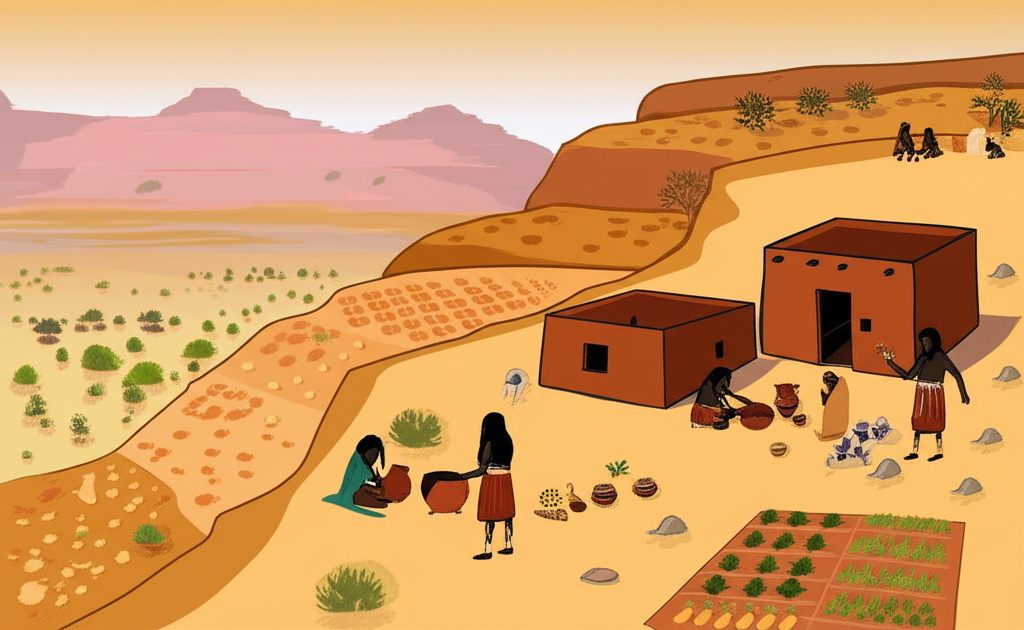
The daily existence of the Ancient Hopi was a testament to sophisticated adaptation within the arid landscape of the American Southwest. Survival was predicated not on chance, but on meticulously developed strategies that optimized their use of scarce resources. Agricultural practices formed the core of their society. The Hopi perfected dry farming, cultivating maize, beans, and squash by strategically planting in areas that captured runoff from summer storms and utilizing terracing to conserve precious soil and water. This profound understanding of their ecosystem allowed them to sustain large communities for centuries.
Social organization was equally critical to their resilience. The matrilineal clan system governed nearly every facet of daily life, dictating land tenure, ceremonial responsibilities, and social standing. Labor was structured along gender lines; men were primarily responsible for tending the fields, hunting, and weaving, while women managed the household, prepared food, and crafted pottery. This division ensured that all essential tasks were completed with great efficiency. The rhythm of daily life was dictated not by a clock, but by the seasons, the needs of the crops, and the complex ceremonial calendar that bound the people to their land and their deeply held beliefs.