The military arm of the East India Company evolved from modest beginnings as a collection of factory guards into one of the most formidable private armies in history. Initially tasked with protecting commercial interests and trading posts, its strategic purpose underwent a profound transformation with the decline of Mughal authority in the 18th century. The Company’s directors recognized an opportunity not merely for security, but for territorial conquest and political dominance.
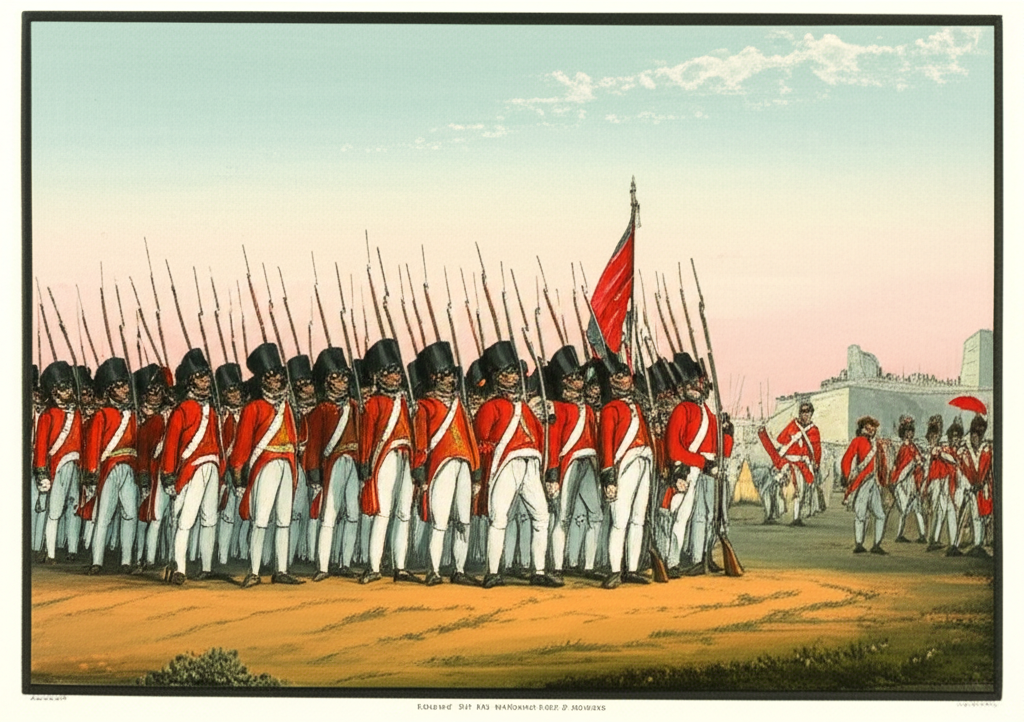
The key to this expansion was the development of the three Presidency Armies of Bengal, Madras, and Bombay. The strategic brilliance of this system lay in its composition. While commanded by a European officer corps, the vast majority of the infantry and cavalry consisted of native Indian soldiers, or sepoys. This model proved exceptionally effective, allowing the Company to project immense military power across the subcontinent at a fraction of the cost of deploying an all-European force.
This hybrid army was the primary instrument of British colonial policy, systematically defeating rival European powers and subjugating local Indian states. It combined European military discipline and technology with the manpower and local adaptability of Indian recruits. By the early 19th century, the Company’s army had become the dominant military force in India, an engine of imperial ambition that ultimately secured British control over the entire region.